
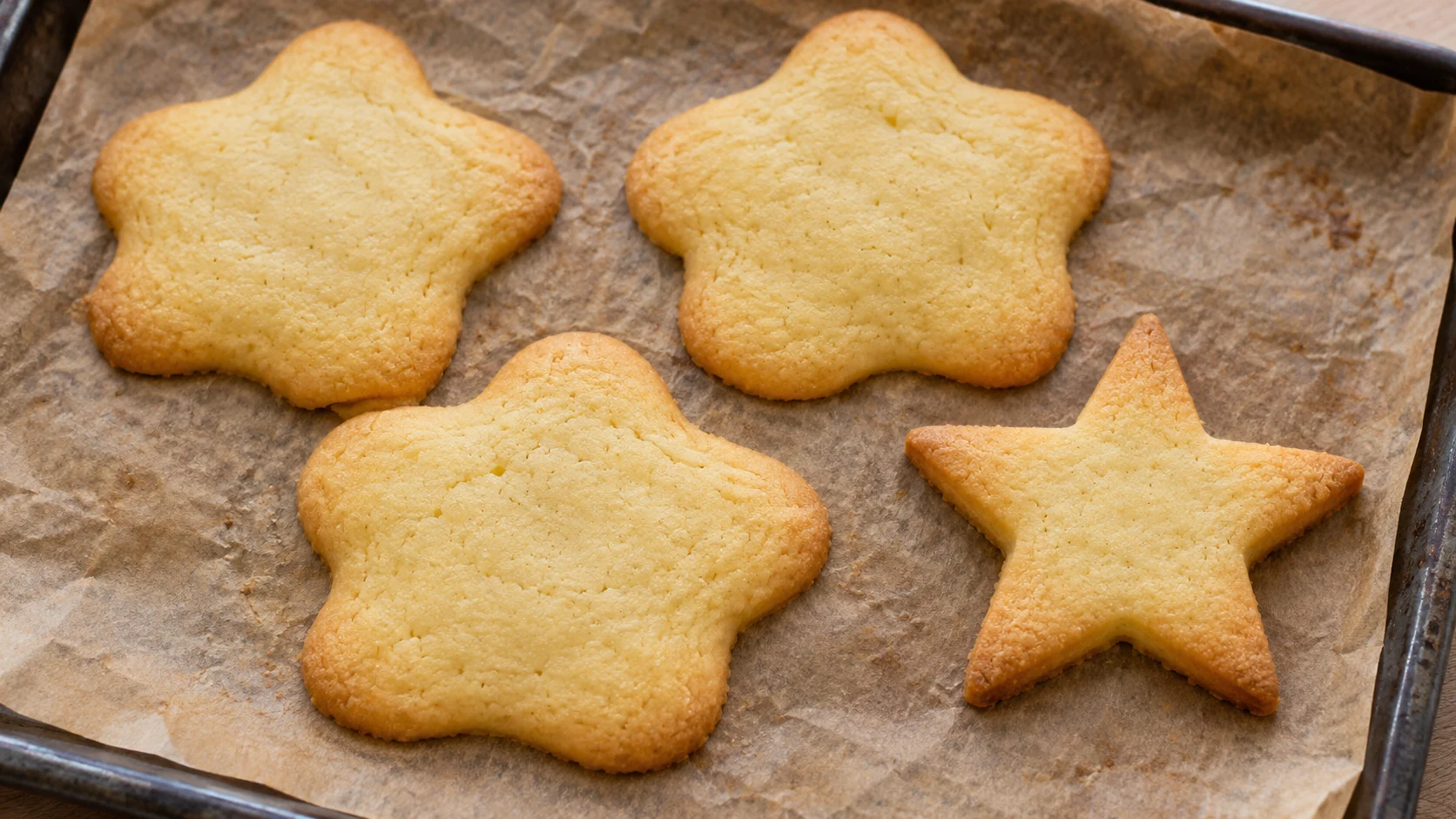
Did your star-shaped cookies come out of the oven looking like little circles? If you have dough left, you can often save the next batch. Cover and chill the dough, let the baking sheet cool completely, and bake two test cookies on fresh parchment. You’ll see whether the dough holds its shape before committing a whole tray.
Cutout cookies should keep their outlines. Some spread is normal for many drop cookies. When separate scoops melt into one big sheet, it’s worth troubleshooting those too.
1. The butter was too warm
If your recipe calls for softened butter, it should give when pressed and still feel cool. If it looks oily or the edges have started to melt, the fat can flow early in baking, before the cookie sets.
For the next tray: If the dough is already mixed, chill it and bake a small test batch. When mixing a fresh batch, follow the recipe’s cues. Some shortbread recipes call for cold butter, while some drop cookies are designed around melted butter.
2. The dough warmed up as you rolled it
Even chilled dough softens in a warm kitchen. Scraps are especially prone to warming up as you gather and reroll them. You might notice the points bending when you pick up a star or dough sticking to the cutter.
For the next tray: Work with one portion at a time and keep the other in the fridge. If you’ve already cut out the shapes, chill them flat on parchment until firm. Check after about 15 minutes. A thick portion of dough may take longer. Chill the scraps again before rerolling if they feel soft.
3. The baking sheet was hot or greased
If the first batch looks good and the second spreads, check the sheet. Hot metal warms the dough before it goes into the oven. Greasing the sheet can also encourage more spread.
For the next tray: Use a completely cool sheet lined with ungreased parchment, unless your recipe specifies a different surface. With one sheet, you can prepare the next batch on parchment and slide it onto the sheet once it’s cool. Leave enough room between cookies for a little normal spread.
4. The balance of flour, sugar and fat changed
Flour gives cookie dough structure. If you used too little flour or accidentally added extra sugar or fat when scaling the recipe, even cold dough can spread on a cool sheet. Swapping the type of sugar or fat can change the result too.
For the next tray: Check your quantities before baking the remaining dough. If you know exactly what you left out, add the missing amount. If you’re unsure, bake a test cookie and use a kitchen scale next time if the recipe provides weights. Mixing in extra flour by feel can leave the cookies dry.
5. The oven was still too cool
In an oven that’s still heating up, the butter can melt before the cookies have a chance to set. Check both the temperature and the bake mode in the recipe. Conventional and convection settings behave differently.
For the next tray: Let the oven preheat fully and start on the rack the recipe recommends. If several batches turn out pale and flat despite firm dough and a cool sheet, use an oven thermometer to check the actual temperature before adjusting it.
What went wrong with your batch?
| What you notice | What to check first |
|---|---|
| The stars bend before they even reach the oven. | Chill the cutouts and check them again once firm. |
| The first tray looks good, but the second spreads. | Cool the sheet completely and check whether the remaining dough got warm. |
| Even firm, chilled cutouts spread. | Check the parchment, oven setting and ingredient measurements. |
Use these clues to choose what to try first. Bake two cookies of the same size and change one thing at a time if you can. If the flat cookies are fully baked and taste good, crumble them over ice cream or a pudding.
King Arthur Baking’s team has examined how dough, baking sheets and oven settings affect spread. Guide to cookie spread · Baking surface comparison
Cookie recipes for your next batch
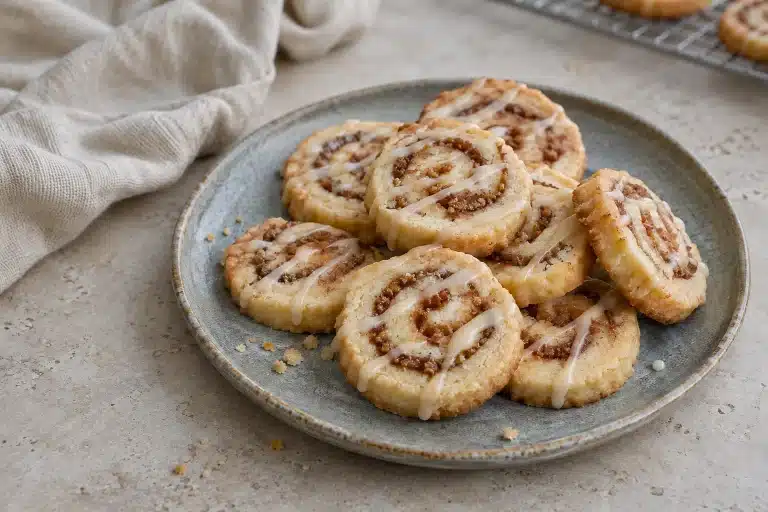
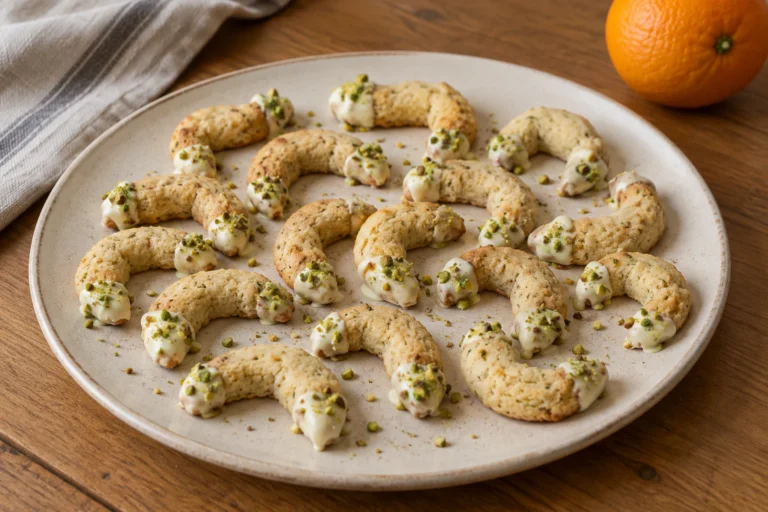
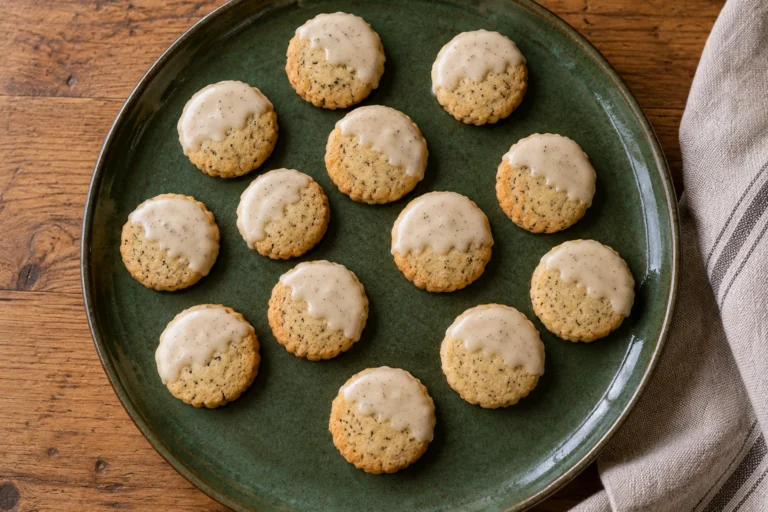
Try the tips with these recipes. Check that the cinnamon swirls stay distinct, the crescents hold their shape, and the chai cookies have room to spread.
Leave a Reply