
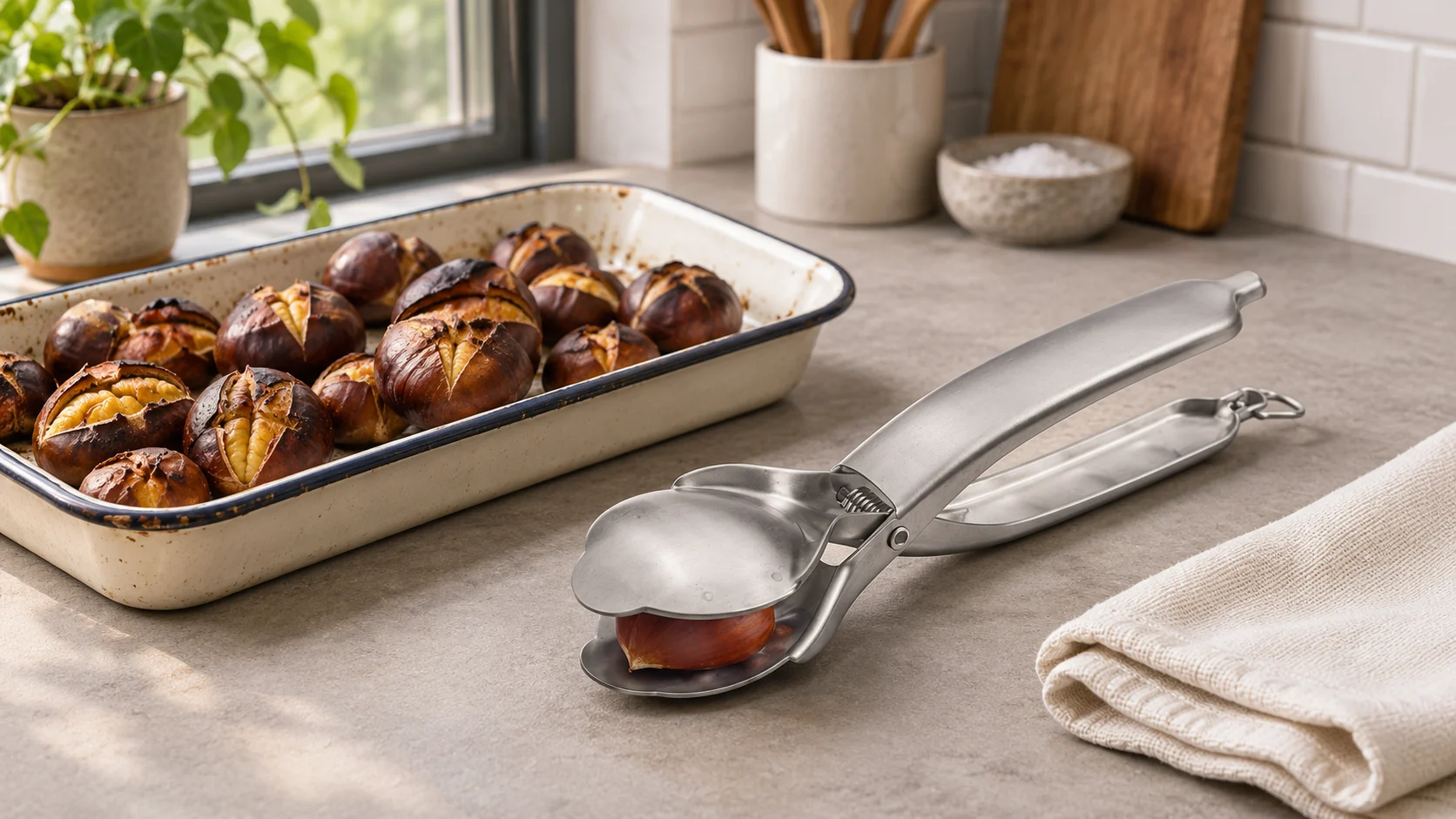
A warm paper bag of roasted chestnuts is a winter market classic. At home, it starts with a small cross in each shell. A chestnut scorer makes that step easier when you’re preparing a whole tray. Then roast the chestnuts at 400°F (200°C) for about 20 to 30 minutes.
What does a chestnut scorer do?
A cross-blade scorer makes both cuts in one squeeze. The shell opens along those cuts in the oven, giving you somewhere to start peeling. It’s handy for a whole tray or several batches over the holidays. For a handful, a small sharp knife is enough.
Advertisement · Affiliate link
As an Amazon Associate we earn from qualifying purchases.
Check the first chestnut to make sure both cuts have opened the shell. If a very small or large chestnut won’t sit securely in the tool, score it on a cutting board.
Which chestnuts are best for roasting?
Look for fresh, raw edible chestnuts in their shells. Choose plump ones with firm, shiny shells and skip any with holes, mold or a musty smell. A chestnut that rattles when shaken may already have dried out. Buying chestnuts of roughly the same size makes it easier to roast them evenly. German Federal Centre for Nutrition
Vacuum-packed, peeled chestnuts are handy for soups and fillings. For the winter market experience, buy raw chestnuts with their shells on. Choose chestnuts sold as food. Horse chestnuts are unsuitable for eating.
How to roast chestnuts in the oven
Start with about 1 lb (450–500 g) of fresh chestnuts for one tray. The classic version needs only the chestnuts.
- Preheat the oven to 400°F (200°C). Rinse the chestnuts briefly and dry them so they’re easier to handle.
- Score an X in each shell. Follow the instructions for your scorer. If using a small sharp knife, set each chestnut flat side down on a nonslip cutting board. Cut through the shell just to the flesh. This gives steam a way out and makes peeling easier.
- Roast cut side up. Spread the chestnuts in a single layer on a baking sheet and place it on the center rack. Check after 20 minutes. Look for shells curling back at the cuts, then open one of the larger chestnuts. The center should be tender and split easily. Give any that are still firm a few more minutes.
- Peel while warm. Once the chestnuts are cool enough to handle, pull the shell back from the cut and remove the thin inner skin. Work with a few at a time and cover the rest with a clean kitchen towel to keep them warm.
Use the open shells and tender centers to judge doneness. The size of the chestnuts and your oven affect the timing. Roasting guidance from VerbraucherFenster Hessen
What to do when chestnuts are hard to peel
| What you notice | What to do |
|---|---|
| The shell has opened, but the center is still firm. | Remove any smaller chestnuts that are already tender. Give the larger ones a few more minutes, then check one again. |
| The shell comes off, but the fuzzy inner skin sticks. | Start while the chestnuts are still warm. Lift the skin where it curls away near the cross and pull it off in small pieces. |
| Some centers are dry and crumbly. | Next time, check the smaller chestnuts earlier or buy a batch of similarly sized fresh chestnuts. |
| A chestnut smells musty or shows visible mold. | Discard it. |
If chestnuts tend to dry out in your oven, try placing a small ovenproof dish of water alongside the tray. The German Federal Centre for Nutrition suggests this to increase humidity while the chestnuts roast. More roasting tips
How to serve roasted chestnuts
For the winter market feel, tip the warm chestnuts into a paper bag and put out a small bowl for the shells. For a savory side, toss the peeled chestnuts in butter with chopped rosemary and a pinch of salt. You can also chop them and scatter them over a creamy soup.
Leave a Reply